Electromagnetic Plasma:
Nature's own CO₂ splitter
Lightning in the atmosphere naturally dissociates molecules. Plasmetal recreates this process in an engineered reactor — turning CO₂ into carbon and oxygen with precision, repeatability, and industrial scale.
Four steps from CO₂
to clean carbon.
CO₂ Feed & Retrofit
Carbon dioxide — captured from industrial furnace exhaust, also known as "top gas," or directly from the atmosphere — is fed as a gas stream into the plasma reactor chamber. This allowing it to be retrofit to conventional iron refining and smelting blast furnaces, leaving existing infrastructure entirely alone.
Electromagnetic Plasma Generation
A high-power electromagnetic field ionises the gas stream, generating a sustained plasma. All the work is done by electromagnetic fields — no sensitive catalysts with short lifetimes are required, ensuring maximum process uptime and reliability.
Plasma Electrolysis — CO₂ → C + O₂
The dissociated plasma environment drives a patented electrolytic reaction: CO₂ is split into elemental solid carbon and molecular oxygen. No intermediate products. No CO. No methane. Full dissociation.
Product Recovery & Recycling
Solid carbon particles are collected and processed. This carbon can be directly recycled back into the blast furnace, creating a closed-cycle smelting process. High-purity reclaimed carbon can also be sold to industries that require carbon, such as the battery industry, adding a new revenue stream.
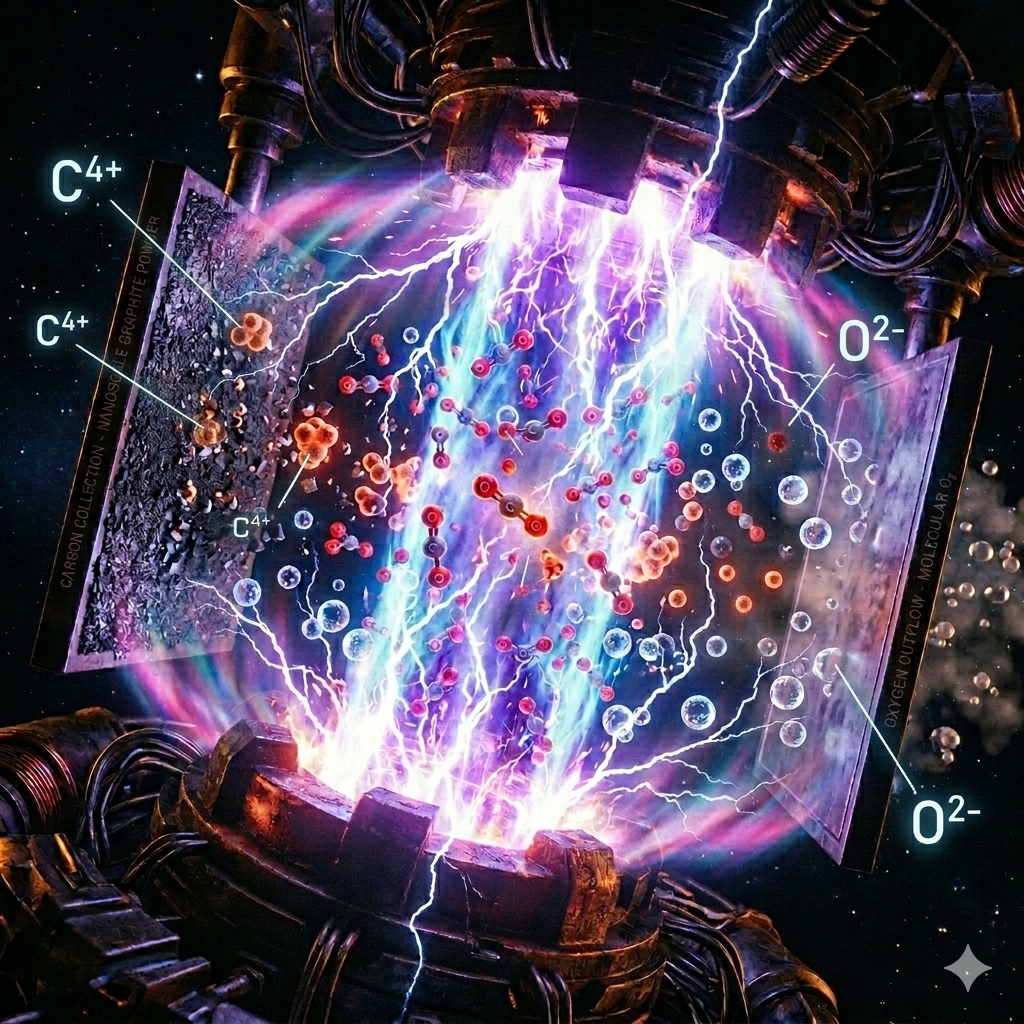
The key distinction: Plasmetal electrolysis does not produce large amounts of toxic gases like CO as a partial product. Crucially, it does not require a source of expensive green hydrogen ($3.50-$12/kg+) or CCS geological assessments, pipelines, and long-term monitoring.
How plasma electrolysis compares
to other carbon management approaches
Robust to Contaminants
Unlike catalyst-dependent processes that are easily poisoned, Plasmetal's electromagnetic fields are highly resilient. The system handles "top gas" containing silica, iron oxide, moisture, air, and sulfur without loss in efficiency. This makes it a standard-issue solution for real-world heavy industry.
Built for the real furnace.
Blast furnace exhaust is complex. Most carbon capture technologies require clinical-level purity to avoid equipment failure. The Plasmetal electrolyser is built for the foundry, not the laboratory floor.
A technology platform with potential far beyond steelmaking.
Green Steel at Industrial Scale
Integrated directly with blast furnace and electric arc furnace operations, Plasmetal's plasma units can process furnace offgas in real time — turning a liability into a revenue stream while eliminating scope 1 emissions.
Carbon Materials for the Battery Economy
The solid carbon produced by plasma electrolysis is electrode-grade quality — a critical material for lithium and sodium battery anodes, supercapacitors, and structural composites in a rapidly growing global market.
Coupling with Renewable Energy
As energy storage for solar and wind improves, excess renewable electricity can be directed into plasma reactors during off-peak periods — converting stranded energy into permanent carbon removal and valuable products simultaneously.
Widespread Industrial Adoption
The potential for a "negative green premium" — where it's cheaper to make green steel using plasma than to emit exhaust CO₂ — will drive global industrial transition. When solar and wind hits ≤ $0.02/kWh, the economics become undeniable.
Ready to collaborate?
We're actively seeking research partnerships, pilot plant hosts, and industrial partners to prove and scale this technology. The conversation starts here.
Contact the Plasmetal Team →